UNDERSTANDING MUSCLE, TISSUE REPAIR & PEPTIDE RESEARCH
RE-PAIR is an educational resource about musculoskeletal healing, tissue repair, and current research involving BPC-157, TB-500, and KPV.
SCIENCE
INFORMS
HEALTHIER
TOMORROWS
KNOWLEDGE
SUPPORTS
INFORMED
CONVERSATIONS
THE HEALING PROCESS
Tissue repair is a complex, multi-phase process that occurs in overlapping stages.
INFLAMMATION
The body responds to injury with inflammation, which helps remove debris and initiate healing.
REPAIR & PROLIFERATION
Cells such as fibroblasts produce new tissue, blood vessels form (angiogenesis), and collagen begins to build.
REMODELING
Tissue strengthens and reorganizes over time, improving function, flexibility and resilience.
MUSCLE, TENDON & CONNECTIVE TISSUE
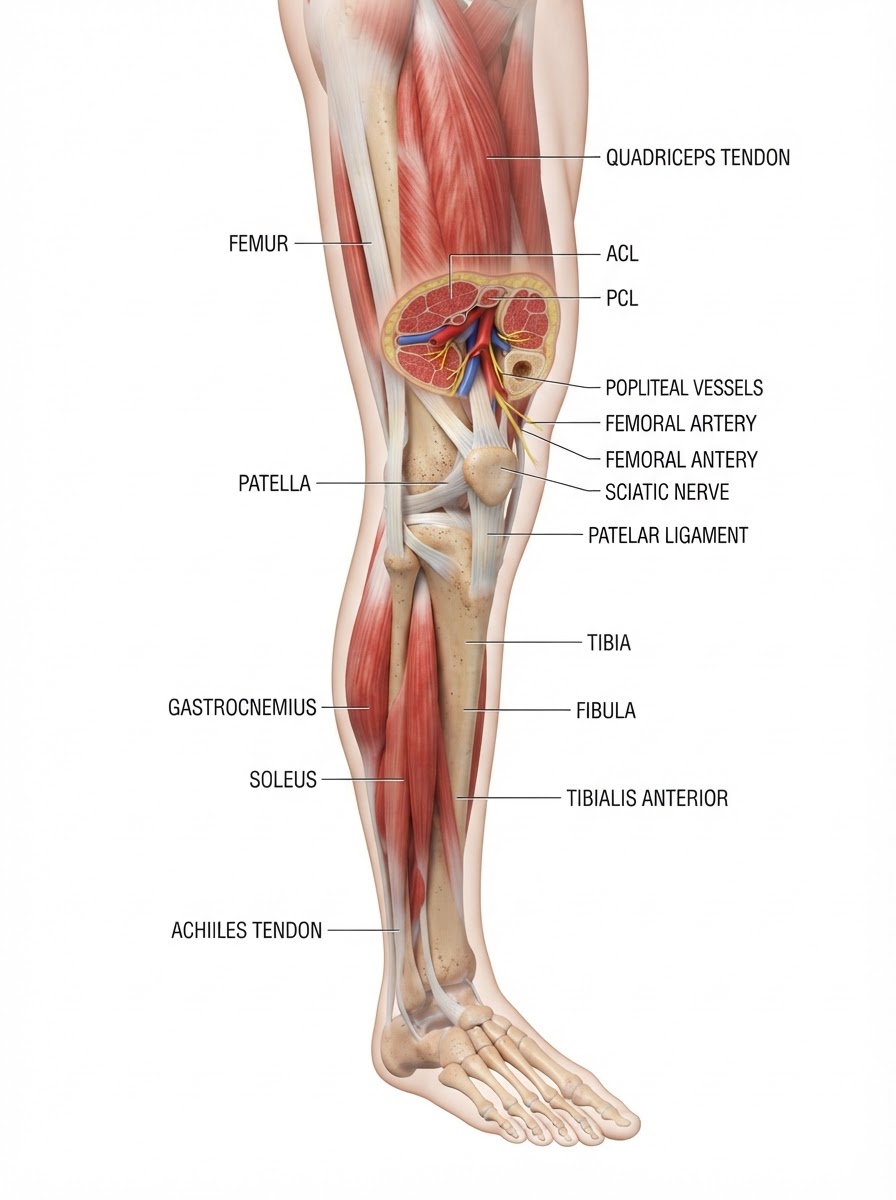
Generates force and enables movement
Connects muscle to bone
Stabilizes joints
Provides structure and support
FACTORS THAT INFLUENCE RECOVERY
BPC-157
A PEPTIDE UNDER INVESTIGATION- BPC-157 is a synthetic peptide derived from a protein found in the stomach.
- Preclinical studies suggest potential effects in models of tendon, ligament, muscle, bone and gastrointestinal injury.
- Human clinical evidence is very limited, and its safety and effectiveness in humans has not been established.
- BPC-157 is not an FDA-approved treatment for muscle or tissue repair.
TB-500
THYMOSIN BETA-4 FRAGMENT RESEARCH- TB-500 is a synthetic version of a fragment of thymosin beta-4, a naturally occurring peptide involved in cell movement and tissue repair.
- A 2026 rat study evaluated BPC-157, synthetic TB-500 and their combination in an Achilles tendon injury model. While animal results are interesting, they do not establish human efficacy.
- The FDA reports no identified human exposure data for TB-500 fragment drug products and lacks important safety information.
- TB-500 is not an FDA-approved medication.
KPV
A MELANOCORTIN-DERIVED TRIPEPTIDE- KPV is a short tripeptide (Lys-Pro-Val) derived from alpha-melanocyte stimulating hormone (α-MSH).
- Published research demonstrates anti-inflammatory activity primarily in cellular and animal models, including murine inflammatory bowel disease research.
- The FDA states it has not identified human exposure data for drug products containing KPV by any route of administration and lacks important human safety information.
- KPV is not an FDA-approved medication.
WHAT THE EVIDENCE SHOWS
Most research is from laboratory and animal studies.
Human clinical studies are limited in number and scope.
Preclinical findings can help identify potential mechanisms, but do not establish clinical effectiveness in humans.
High-quality, controlled human clinical trials are needed to determine safety, dosing, effectiveness and long-term risks.
REGULATORY & SAFETY CONSIDERATIONS
BPC-157, TB-500 and KPV are not FDA-approved treatments for muscle or tissue repair.
The FDA has identified these substances as presenting or potentially presenting significant safety concerns in compounding, with limited or absent human safety information.
Compounded medications are not FDA-approved. The FDA does not review compounded drugs for safety, effectiveness, or quality before they are marketed.
The regulatory status of investigational peptides can change as new information becomes available.
QUESTIONS TO DISCUSS WITH A HEALTHCARE PROFESSIONAL
- What is my specific injury or condition?
- What established treatments are available for my situation?
- What human clinical evidence exists for these peptides?
- Are these substances FDA-approved for my condition?
- What are the known and unknown risks?
- Could they interact with my current medications or health conditions?
- What role should rehabilitation, physical therapy and gradual return to activity have in my recovery?
- How will my progress be monitored?
https://www.fda.gov/drugs
https://pubmed.ncbi.nlm.nih.gov
https://www.nih.gov
RE-PAIR: Understanding Muscle, Tissue Repair & Peptide Research
RE-PAIR is an educational resource about musculoskeletal healing, tissue repair, and current research involving BPC-157, TB-500, and KPV.
Muscles, tendons, ligaments, and other connective tissues undergo complex biological processes following injury. Recovery can involve inflammation, cellular signaling, blood-vessel formation, collagen production, tissue remodeling, and gradual restoration of function.
Researchers have investigated whether certain peptides may influence some of these biological processes. Much of the available research remains preclinical, and laboratory or animal findings should not be interpreted as established clinical benefits in humans.
Understanding Muscle and Tissue Repair
Tissue healing is a complex process that generally occurs through overlapping stages:
- An initial inflammatory response
- Recruitment of cells involved in repair
- Formation of new tissue
- Blood-vessel development (angiogenesis)
- Collagen production and organization
- Tissue remodeling
- Gradual restoration of strength and function
Recovery can be affected by the type and severity of injury, blood supply, age, nutrition, underlying health conditions, medications, rehabilitation, and activity level.
BPC-157
BPC-157 is a synthetic peptide that has been investigated experimentally in relation to tissue healing.
Preclinical research has examined BPC-157 in models involving tendon, ligament, skeletal muscle, bone, and gastrointestinal injuries.
A 2025 systematic review of BPC-157 in orthopaedic sports medicine found that the available literature showed potential healing effects in preclinical musculoskeletal models, while also emphasizing the limited clinical evidence available in humans. PubMed
BPC-157 is not an FDA-approved treatment for muscle, tendon, ligament, or other musculoskeletal injuries.
FDA states that compounded drugs containing BPC-157 may present immunogenicity and peptide-related impurity concerns and that available safety information for proposed routes of administration is limited. U.S. Food and Drug Administration
TB-500
TB-500 refers to a synthetic peptide related to a fragment of thymosin beta-4, a naturally occurring peptide involved in cellular processes.
Research involving thymosin beta-4 and related substances has investigated cellular migration, inflammation, blood-vessel formation, wound healing, and tissue repair.
A 2026 animal study examined BPC-157 and synthetic TB-500, separately and in combination, in a rat Achilles tendon injury model. While such research may contribute to understanding potential biological effects, results in rats do not establish safety or effectiveness for human tendon or muscle injuries. PubMed
FDA states that it has not identified human exposure data for drug products containing the thymosin beta-4 fragment identified as TB-500 and lacks important information necessary to determine its safety in humans. U.S. Food and Drug Administration
TB-500 is not an FDA-approved medication.
KPV
KPV is a short tripeptide consisting of the amino acids lysine-proline-valine and is derived from the C-terminal region of alpha-melanocyte-stimulating hormone (α-MSH).
Published research has primarily investigated KPV in relation to inflammatory signaling.
Laboratory and animal studies have reported anti-inflammatory activity involving pathways such as NF-κB and inflammatory cytokine signaling. Research in mouse models of intestinal inflammation has also investigated potential biological effects of KPV. PubMed
These findings do not establish KPV as a treatment for muscle repair in humans.
In its 2026 review, FDA stated that published literature did not reveal studies in which compounded KPV drug products were used in humans. U.S. Food and Drug Administration
KPV is not an FDA-approved medication.
Understanding the Evidence
Research involving BPC-157, TB-500, and KPV includes:
- Laboratory studies
- Cellular research
- Animal models
- Mechanistic studies
- Limited human research
It is important to distinguish among biological mechanisms, laboratory research, animal studies, small human studies, controlled clinical trials, and FDA-approved medical treatments.
Preclinical research can help scientists identify biological mechanisms and determine whether additional investigation may be warranted.
However, positive results in cells or animals do not establish that a substance will safely or effectively repair muscle, tendons, ligaments, or other tissues in humans.
High-quality controlled human clinical trials are needed to determine safety, effectiveness, appropriate dosing, potential interactions, and long-term risks.
Musculoskeletal Recovery
Recovery from muscle or connective-tissue injury depends on the specific condition and individual patient. Established approaches may include:
- Appropriate medical evaluation
- Activity modification
- Physical therapy
- Progressive rehabilitation
- Strength and mobility exercises
- Nutrition and hydration
- Adequate recovery
- Management of underlying medical conditions
- Other medical or surgical treatment when clinically indicated
Identifying the specific injury and its severity is important when determining an appropriate recovery plan.
Regulatory and Safety Considerations
BPC-157, TB-500, and KPV are not FDA-approved treatments for muscle or tissue repair.
FDA has identified potential significant safety concerns involving these substances in the context of compounding. FDA reports limited safety information for BPC-157 and states that it has not identified human exposure data for KPV or the thymosin beta-4 fragment identified as TB-500. U.S. Food and Drug Administration
In July 2026, FDA's Pharmacy Compounding Advisory Committee considered BPC-157-, KPV-, and TB-500-related bulk drug substances as part of its review of substances being considered for the 503A Bulks List. FDA identified wound healing among the uses being evaluated for KPV and TB-500. U.S. Food and Drug Administration
That regulatory review should not be interpreted as FDA approval of these substances or their proposed uses.
Compounded medications are not FDA-approved. FDA does not review compounded drugs for safety, effectiveness, or quality before they are marketed. U.S. Food and Drug Administration
Questions to Discuss With a Healthcare Professional
Patients learning about musculoskeletal recovery and peptide research may wish to ask:
- What specific injury or condition do I have?
- What established treatments are available?
- What human clinical evidence exists for the peptide being discussed?
- Is the substance FDA-approved for my condition?
- What is known about its short- and long-term safety?
- What risks or uncertainties remain unknown?
- Could it interact with my medications or health conditions?
- What role should physical therapy and rehabilitation have in my recovery?
- How should activity be gradually resumed?
- How would my recovery be monitored?
Continuing Research
Research into musculoskeletal healing, inflammation, regenerative medicine, cellular signaling, and peptide biology continues to evolve.
BPC-157, TB-500, and KPV have been investigated in experimental settings, but the quantity and quality of evidence differ among these substances.
Recent animal research continues to investigate BPC-157 and TB-500 in tendon healing, while KPV research has focused substantially on inflammatory pathways and experimental inflammatory conditions. PubMed
Additional controlled human clinical research is needed to determine whether experimental findings translate into safe and effective medical treatments.
Patients should distinguish between biological mechanisms, preclinical findings, human clinical evidence, and FDA-approved treatments when evaluating information about peptides.
Educational Resources
https://www.fda.gov/drugs/human-drug-compounding/certain-bulk-drug-substances-use-compounding-may-present-significant-safety-risks
https://www.fda.gov/advisory-committees/advisory-committee-calendar/july-23-24-2026-meeting-pharmacy-compounding-advisory-committee-07232026
https://pubmed.ncbi.nlm.nih.gov/40756949/
https://pubmed.ncbi.nlm.nih.gov/42542926/
https://pubmed.ncbi.nlm.nih.gov/18092346/
This page is provided for general educational purposes only. It is not intended to provide medical advice, diagnosis, or treatment.
References to peptides, tissue-repair mechanisms, biological pathways, laboratory research, animal studies, or areas of clinical investigation are provided for educational purposes and should not be interpreted as a recommendation or endorsement of a particular substance or treatment.
Discussion of an investigational substance does not establish that the substance is safe, effective, FDA-approved, or appropriate for medical use.
Treatment decisions should be individualized and made with an appropriately licensed healthcare professional based on medical history, diagnosis, current health, medications, potential risks, available clinical evidence, and professional medical judgment.
FDA approval status, compounding policies, clinical evidence, and regulatory requirements may change. Current information should be verified through the U.S. Food & Drug Administration and other recognized medical resources.